The Supercar Verifier's Playbook

How Collectors Read a Build Sheet Before They Read the Price Tag

A practical system for identifying the factory details that place visually identical exotic cars in different value tiers - and verifying whether an asking price reflects the build, not just the badge.

The badge tells you the model.
The build tells you the market.

Within the same model, one factory decision can place two nearly identical cars in entirely different value tiers - a transmission, an engine revision, a lightweight package, an original-option combination, a production detail the market has learned to price differently.

You've already seen this. It's why arguments about these cars get so specific - specific years, specific options, specific numbers - because the people arguing already know a "manual" isn't just a spec line, it's a different car entirely.

Most buyers compare cars by year, mileage, color, and condition. Collectors compare the specification underneath them.

This Playbook teaches you how to do that - systematically, on any car, not just the ones you've already memorized.

Who's Behind This

Who's Behind This

Nour

I'm Nour. I publish spec-gap breakdowns that have passed 3 million views across social media - you've probably seen the Mercedes 300SL Gullwing video or the Ferrari 275 GTB one.

Every video comes from the same research process: verified transaction records, documented mechanical issues, real market data. This playbook is that process, written down so you can run it yourself on any car.

The Actual Skill

The Actual Skill

Here's what most people miss: the market doesn't always price the difference correctly.

Two cars, same model, same year, same photos-from-across-the-lot. One has a factory configuration that puts it in a completely different tier. If the listing, the seller, or the "comparable sales" everyone's citing don't reflect that - the asking price is wrong. Not fraudulent. Not a scam. Just misclassified.

That gap is where the actual skill lives: knowing which factory differences create a genuinely separate market, telling that apart from a detail that's merely interesting, and verifying it well enough to act on - negotiate, pass, buy, or simply understand exactly what you're looking at.

This isn't about predicting what a car will do next. It's about correctly pricing what it already is.

What's Inside

What's Inside

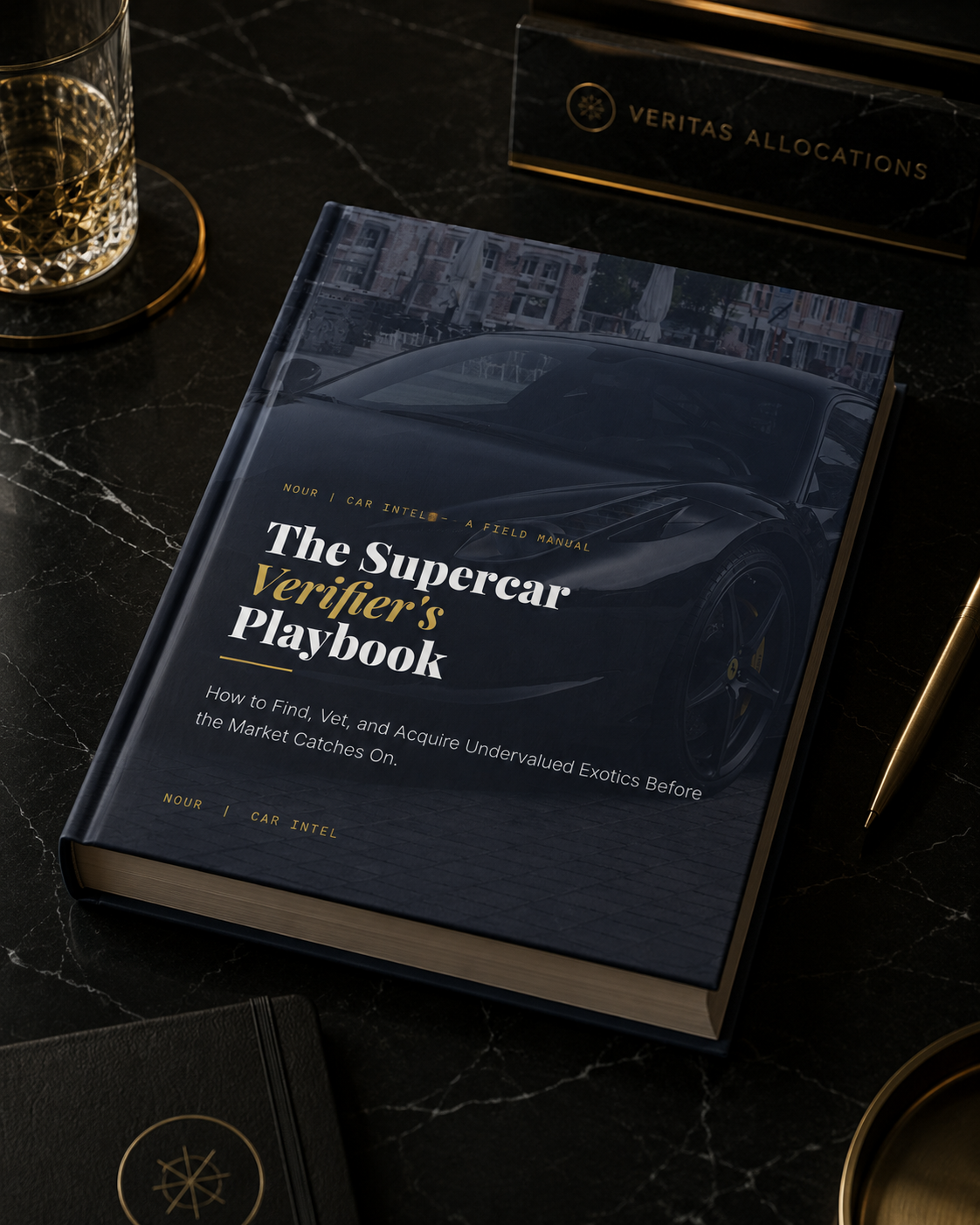
The Supercar Verifier's Playbook teaches a repeatable method for identifying, verifying, and correctly classifying the factory details that change an exotic car's market position.

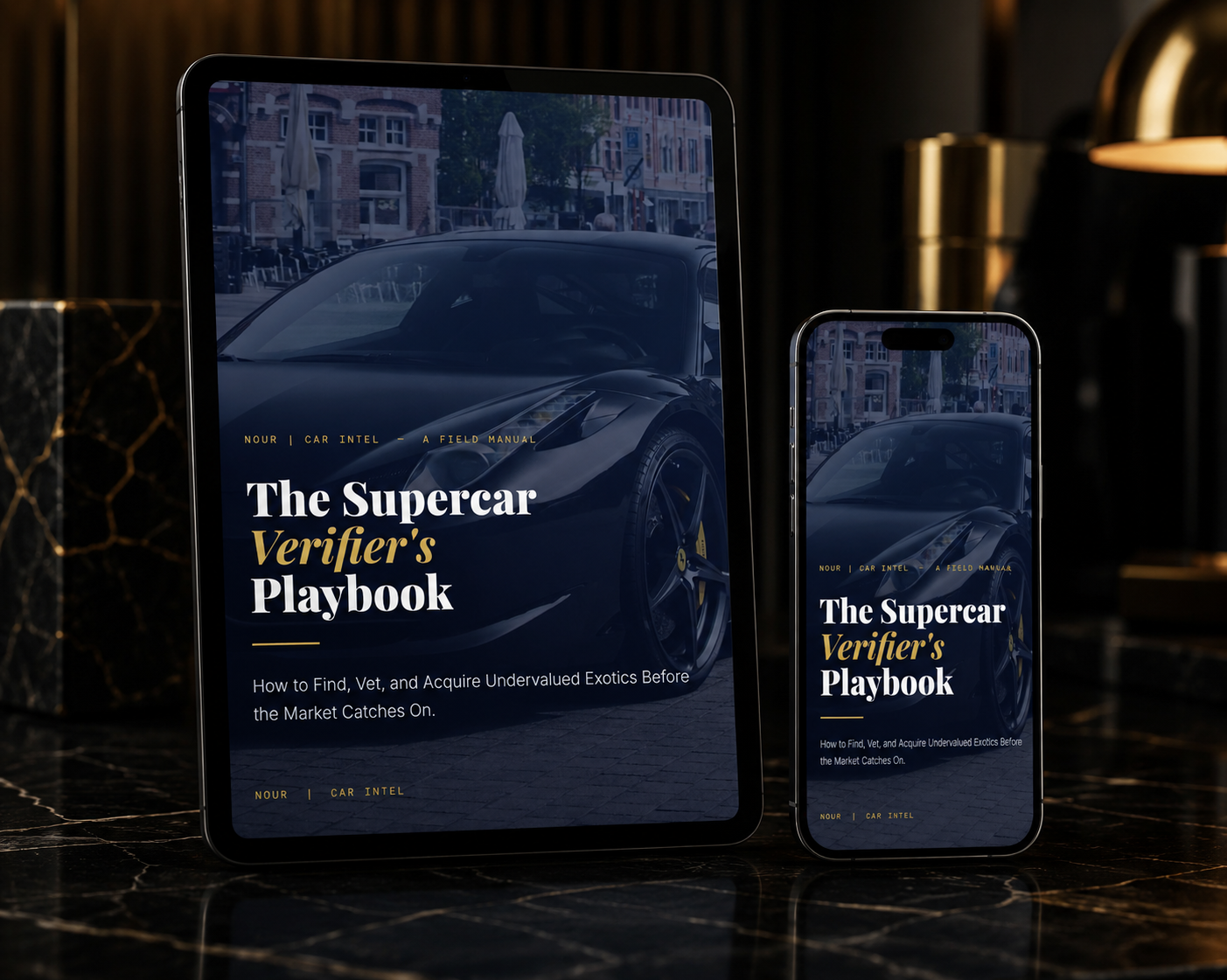
The Supercar Verifier's Playbook on tablet and phone

21 pages. 6 chapters plus a print-and-keep checklist.

  • Digital forensics (VIN checks, service gap audits)
  • Physical inspection (paint gauges, hot-restart tests)
  • Specialist PPI protocol
  • The four appreciation patterns
  • Brand-specific notes on Ferrari, Porsche, and Lamborghini

The Spec Hierarchy

which factory differences create a genuinely separate value tier, and which are cosmetic noise that doesn't move price

The Spec-Delta Method

how to compare an individual car against its ordinary baseline and isolate the exact detail responsible for the gap

The Evidence Stack

build sheets, option codes, production records, and physical details: what each one actually proves, and what it doesn't

The Classification Test

is this car being compared and priced against the right group of cars, or lumped in with examples it doesn't actually belong with

The Comparable Filter

how to compare sold prices without mixing standard and collector-grade examples, which is where most "market value" numbers quietly go wrong

The Verification Call

the exact documents and questions that turn a promising lead into a defensible conclusion, not a guess

You'll learn how to separate meaningful configuration differences from noise, request the evidence that actually proves a claim, and compare a car only against genuinely equivalent examples.

The objective isn't to predict what any car will do next. It's to understand what you're looking at now - so you can price the build, not the badge.

A Sample from Chapter 6

A Sample from Chapter 6

Excerpt

Ferrari: F1 vs. Manual - the gap that ate the F430 market

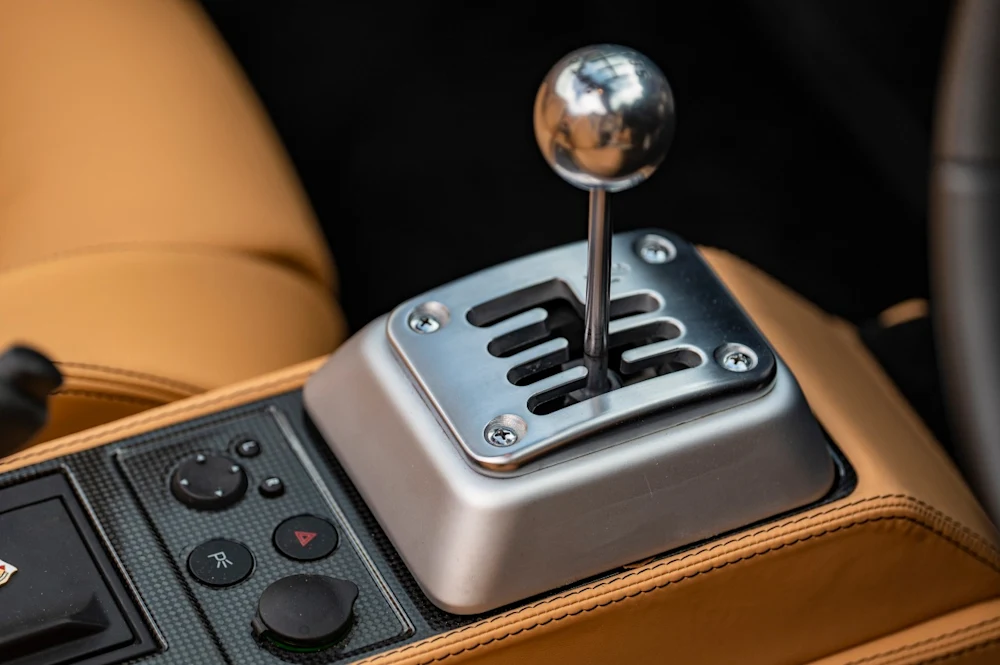
Between 2005 and 2009 the F430 came with either Ferrari's F1 paddle-shift transmission or a real six-speed manual. Only around 1 in 10 got the manual. That's the whole story behind why a manual F430 is worth roughly double an equivalent F1 car - Hagerty puts a #3-condition F1 car at $113,000 against $226,000 for the same condition manual.

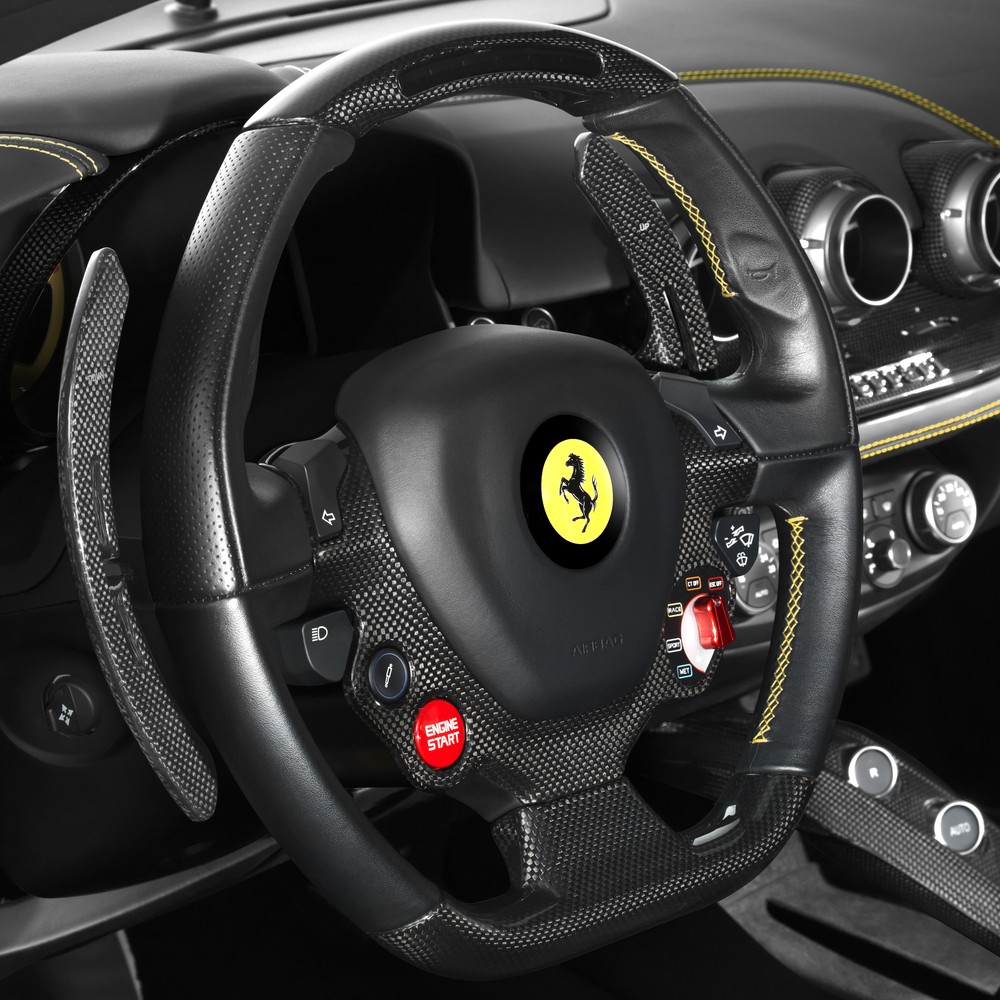
Check the shifter, not the spec sheet: gated metal shifter with a visible H-pattern means manual; paddles with no clutch pedal means F1.

One more thing worth knowing: manual conversions exist now. A retrofitted car can drive great, but it doesn't command factory-manual money. Ask directly whether the gearbox is factory or converted - sellers don't always volunteer this.

Who This Is For (and isn't)

Who This Is For
(and isn't)

This is for you if:

  • You're an active or aspiring exotic car buyer, and six-figure decisions are or will be part of your life
  • You already know more than the average car content viewer, and want a repeatable way to find the details that separate an ordinary example from a genuinely different car
  • You want a system, not a list - something you can run on any model, not just the ones someone else already flagged for you

This isn't for you if:

  • You're looking for predictions about which cars will appreciate - this teaches classification, not forecasting
  • You want someone else to do the verification for you - this is a skill you apply yourself
  • You have zero interest in ever owning an exotic - this is a buyer's tool, not entertainment. (If you're 1-3 years out from your first one, this is exactly when to learn the method.)

Price

Price

$97

$97 now. Goes to $197 after the first 50 buyers.

One document, yours to apply to every car you ever evaluate.

Get the Playbook - $97 →

Guarantee

Guarantee

The Supercar Verifier's Playbook mockup

If this doesn't give you a clearer, repeatable way to tell a meaningful factory difference from noise, DM me on Instagram @nour.intel or email Noureldin.dev@gmail.com. I'll refund you. No questions, no hoops.

FAQ

FAQ

Is this a video course or a written guide?

Written guide - designed to be read once thoroughly, then used as a reference every time you're actually pricing a car.

Do I need to already own an exotic to use this?

No. Equally useful whether you're about to buy your first one or your fifth.

Does this predict which cars will go up in value?

No. It teaches you how to correctly classify and price what a car already is - not what it might become.

What if I have questions after reading it?

DM me on Instagram at @nour.intel. I read every message.

Closing

Closing

The next car you look at will be listed like every other example of its model.

Same badge, same photos, same comparison to cars it may not actually belong with. Whether that price reflects what the car actually is - that's the part most buyers never check.